
Transporting explosives
A person must not transport an explosive in a vehicle unless you hold the required authority.
The following explosives licences authorise the transport of limited amounts of explosives without a separate licence to transport explosives:
- licence to use explosives (maximum 250kg blasting explosives)
- shotfirer licence (maximum 250kg blasting explosives)
- fireworks contractor licence (maximum 250kg fireworks)
- fireworks operator licence (maximum 250kg fireworks)
- licence to collect ammunition (unlimited amount of collectors' ammunition).
However, to transport larger amounts of explosives, or explosives not covered by these licences, a licence to transport explosives will be required.
A person who drives a vehicle that is licensed to transport explosives must hold an explosives driver's licence.
This guide explains the licensing requirements and how to apply. It also includes information on insurance requirements and vehicle safety.
Apply for a licence to transport explosives
You must have a security clearance to apply for a licence or permit relating to security-sensitive explosives.
By July 2026, applications, renewals, and notification will become simpler, faster and smarter as they move into the RSHQ Portal (the Portal). Find out more about the Portal.
Requirement for a licence to transport explosives
A transport licence is required for a person operating a business of transporting explosives in Queensland by vehicle or boat.
A person under the Explosives Act 1999, refers to an individual, corporation (registered company or listed corporation) or partnership.
A transport licence can be issued for 1 or 5 years.
Exceptions for an explosives transport licence
A transport licence is not required when:
- transporting an explosive that is part of the operational equipment of a vehicle (e.g. airbag)
- transporting a distress signal on board a vehicle (e.g. a flare as part of a boat's safety equipment)
- transporting an explosive on board a boat, where the owner or master is subject to the Transport Operations (Marine Safety) Regulation 2016, section 88(1) or (2)
- the person holds another type of explosives licence which authorises the transport of limited amounts of explosives (e.g. a shotfirer licence or fireworks operator licence)
- the person is transporting explosives for a company who holds an interstate licence in that jurisdiction and is delivering explosives on a direct trip into Queensland and immediately returning to that jurisdiction once delivery is completed.
Who can apply
An individual, corporation (registered company or listed corporation) or partnership can apply for a transport licence.
Listed corporations must appoint a responsible person for explosives matters if they have not already done so.
A listed corporation means a body corporate that is included in an official list of a prescribed financial market. Prescribed financial market is defined as 'a financial market that is prescribed by regulations made for the purpose of this definition'.
Each of the following is a prescribed financial market under section 1.0.02A of the Corporations Regulation 2001:
- Asia Pacific Exchange Limited
- ASX Limited
- Chi-X Australia Pty Ltd
- National Stock Exchange of Australia Limited
- SIM Venture Securities Exchange Ltd
How to apply
Your application should include:
- Form E208 – Application for a licence to transport explosives
- licence fee (see below)
- supporting documents (according to the required documentation on the application form).
Note: Failure to provide all required items may result in your application being refused.
Fees and payment options
Licence fees can only be paid via credit card (BPOINT) following submission of the online form. Read more about payment of licence fees.
Fees for licences to transport explosives
| Licence class | Licence fee and period |
|---|---|
| Licence to transport explosives |
1 year
$131.85 (excl. GST) 5 year $659.25 (excl. GST) |
Obligations of licence holders
Licence holders must comply with the terms of their licence, as well as the following codes of practice:
- Class 1 explosives are covered by the Australian explosives code 3rd edition (AEC3).
- Class 2 to 9 explosives are classified as dangerous goods and are covered by the Australian dangerous goods code 7th edition (ADG7).
Also consider...
- Learn more about transporting dangerous goods.
Explosives driver licences
You must have a security clearance to apply for a licence or permit relating to security-sensitive explosives.
By July 2026, applications, renewals, and notification will become simpler, faster and smarter as they move into the RSHQ Portal (the Portal). Find out more about the Portal.
Who needs an explosives driver licence
If you drive a vehicle that's licensed to transport explosives, you'll need to obtain an explosives driver licence unless 1 of the exceptions below applies.
Exceptions
You don't need an explosives driver licence if you:
- have another licence that authorises the transport of the explosives (e.g. shotfirer licence, licence to use, licence to manufacture explosives for a mobile manufacturing unit, or fireworks operator licence) – refer to Part 9 of the Explosives Regulation 2017 for conditions
- are transporting low-risk explosives such as marine flares – refer to Information Bulletin 51 – Transport of low risk loads of explosives (you may need a licence that authorises you to possess the explosives)
- hold an interstate explosives driver licence (only if the driver is undertaking a single direct interstate journey)
- are employed to work at a mine and are transporting the explosive at the mine in the course of your employment.
New employees must apply for an explosives driver licence before they begin driving.
Application requirements
To obtain a licence, you'll need to meet these requirements.
Age requirements
You need to be 21 years or older to apply.
Driving qualifications and history
To be eligible, you will need:
- a valid driver licence for the class of vehicle you are driving
- evidence of your driving history
- evidence that you have completed the relevant units of competency with a registered training organisation.
Driving history
The evidence of your driving history should:
- cover at least the past 5 years (or the entire period you've held your licence if you've been driving for less than 5 years)
- be issued within 30 days of applying
- be issued by the agency that issued your valid driver licence (e.g. Transport and Main Roads in Queensland). If you've held licences in more than 1 jurisdiction within the last 5 years, provide a report from each jurisdiction.
Queensland drivers can apply for a transport history report online.
For a Class 1 Category 3 explosives driver licence, you must also provide a written statement from a current or previous employer showing that you have performed 50 hours under the direct supervision of a driver experienced in the transport of explosives.
Driver training
You must have completed the relevant units of competency (PDF, 88KB) with a registered training organisation within 3 years of applying for your explosives driver licence.
Security clearances
You will need to hold a security clearance to be issued an explosives driver licence.
Medical fitness to drive
You will need to provide a current medical certificate for motor vehicle driver (F3712).
How to apply
Your application should include:
- Form E200 – Application for an occupational authority* (explosives driver licence)
- applicable licence fee (see below)
- supporting documents (according to the required documentation on the application form).
*Note: If you apply for an occupational authority, your biometric data (digital photo and signature) will be retained while your licence remains current. It will be destroyed if your application is withdrawn or refused, or your licence expires.
Fees and payment options
Licence fees can only be paid via credit card (BPOINT) following submission of the online form. Read more about payment options.
Fees for explosives driver licences
| Licence class | Licence fee and period |
|---|---|
Explosives driver licence | 1 year
$71.29 (excl. GST) |
Obligations of licence holders
As a holder of an explosives driver licence, your obligations include:
- complying with the Australian code for the transport of explosives by road and rail and the Australian dangerous goods code
- notifying us of any circumstance that could affect your fitness to drive
- carrying the licence with you when you are transporting explosives.
Also consider…
- Find out more about the explosives driver licences.
- Read how to apply for a licence to transport explosives.
- Learn about medical fitness to drive.
- Obtain a traffic history report.
- Find out how to apply for a security clearance.
Insurance requirements for transporting explosives
You may need to provide proof of insurance when you apply for a new licence or renew an existing licence.
Insurance is required for:
- registered mobile manufacturing units (MMUs)*
- licensed and registered vehicles that transport
- for Class 1 explosives – category 2 or category 3 loads (refer to Table 2.1 of the Australian explosives code 3rd edition (AEC3) for definitions of these quantities)
- for Classes 2 to 9 explosives – placard loads (i.e. when the receptacle has a volume of more than 500L or the explosives weigh more than 500kg).
*Insurance is not compulsory for unregistered MMUs operating on a mine site only.
What the policy must cover
The insurance policy must cover the vehicle nominated for indemnity for at least:
- $2.5 million for a category 2 load of Class 1 explosives
- $5 million for
- category 3 load of Class 1 explosives
- placard load of Classes 2–9 explosives
- an MMU.
The insurance policy must cover the vehicle nominated for indemnity for both:
- personal injury, death, property damage and other damage (other than consequential economic loss) arising out of a relevant event
- costs incurred by or for a federal or state government authority in a clean-up resulting from a relevant event.
A 'relevant event', in relation to a vehicle, means a fire, explosion, leakage or spillage of an explosive in, on or from the vehicle or any packaging transported in or on the vehicle.
Policy requirements
The insurance policy must contain:
- the name of the licence holder or registered owner
- the prescribed sum of policy coverage – $2.5 million or $5 million as appropriate
- a statement that the policy complies with s. 144 of the Explosives Regulation 2017 or the following words for the nominated vehicle
- personal injury, death, property damage and other damage (other than consequential economic loss) arising out of a relevant event
- costs incurred by or for a federal or state government authority in a clean-up resulting from a relevant event (see note above)
- the registration numbers of the vehicle
- a statement that the policy is current at the date you apply for the licence to transport.
Insurance policy restrictions
Some policies have restrictions placed on them by the insurer, such as restrictions on distance, who drivers may be, age and explosives type or class. Where this occurs, the licence lists these restrictions as a condition of licence.
Blanket policy
A blanket insurance policy that meets the above requirements is acceptable when all vehicles for a licence holder are covered by the policy. In this case, the licence holder doesn't need to provide proof of insurance indemnity for licensing purposes if the policy details kept with the Explosives Inspectorate remain current.
Additional vehicles
Some policies list a schedule of vehicles. If you wish to nominate a vehicle on a schedule to a policy that's already cleared, the amended schedule with the additional vehicle will be acceptable if the policy details with the Explosives Inspectorate remain current.
Renewals
When you renew a licence, evidence of the currency of the policy that meets the above requirements is acceptable if the other policy details held with the Explosives Inspectorate remain current.
Also consider...
- Learn more about transporting dangerous goods.
Safe use of high-temperature exhaust systems when transporting explosives
Recently, inspectors have flagged the design and location of high-temperature exhaust systems on newer models of heavy vehicles as a potential safety concern.
If you own or operate vehicles that transport explosives, you must ensure vehicles are suitable, and that your safety management system and security plan keep explosive loads safe and secure.
Impact of vehicle emission standards
Under the Australian Design Rules (ADRs), vehicle emission standards have been in place since the 1970s. Since then, standards for new vehicles have been tightened, requiring lower levels of particulate matter, nitrogen oxides and other emissions.
Since 2003, Australian standards for fuel have also been tightened, with sulphur levels for diesel fuel reducing from 500ppm to 10ppm.
Reductions in the amount of oxides of nitrogen (NOx) allowed in exhaust gases have led to the creation of additional processes within vehicle exhaust systems. As a result, combustion efficiency has reduced and the level of particulate matter or soot in exhaust emissions could potentially increase.
The potential danger
A regeneration (burn-off) process occurs when a certain amount of particulate matter accumulates in the on-board diesel particulate filter. The accumulated particulate matter can be burnt off by increasing the exhaust temperatures.
This temperature increase is achieved through heating coils, catalytic oxidisers and fuel burners. Such regeneration is conducted at very high temperatures (normal soot combustion requires a temperature over 600°C), though this can be reduced by fuel catalysts and other measures.
During this process, exhaust system components get extremely hot, exceeding 300°C.
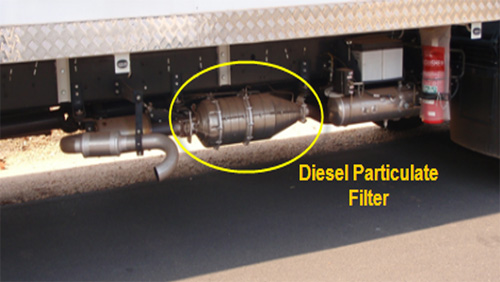
Figure 3: Exhaust system on a rigid truck with a diesel particulate filter fitted
In Figure 3, while the clearances appear adequate, the safety management system and driver training would need to address the potential for this system to start a fire.
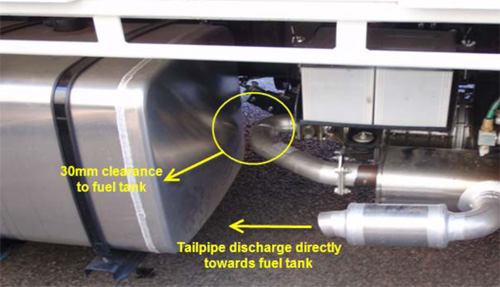
Figure 4: Exhaust system on a rigid truck
Figure 4 shows an exhaust system on a vehicle similar to that in Figure 3; however, the installation of an additional fuel tank creates a problem with spacing. In this instance, the original equipment manufacturer's body builder guide recommends a minimum clearance of 200mm between an exhaust component and a fuel tank. The heat-affected zone measured from the end of the tailpipe is 550mm, with the guide stating that no combustible components should be located in this zone.
As ADR requirements become more stringent, many more vehicles will need to be assessed for explosives transport and other applications where it's critical to address these potential ignition sources.
Any vehicles intended to transport explosives must be carefully assessed for their suitability.
The issues described above relate mainly to rigid vehicles fitted with explosives carry boxes, where the exhaust system runs under the horizontal fire screen and competes for underside space with many other components.
Any potential for diesel fuel to spill onto an exhaust component with temperatures in excess of 300°C is a risk, as is the potential for a fire.
The off-road operation of these vehicles is another concern, which should be covered in an organisation's safety management system, and reinforced through driver training and education. The risk of the exhaust system coming into contact with combustible materials creates the potential to start a fire under the vehicle. (Pulling off the road to give way to a wide load is a credible scenario in regional areas).
What you can do
- When assessing vehicles for suitability, consider the routing of exhaust systems and the proximity to other components, such as fuel tanks, electrical harnesses and cables, brake lines, hydraulic oil systems and fire screens, among other things.
- Do a robust risk assessment when ordering and fitting vehicles with aftermarket options and accessories. Refer to the original manufacturer's specifications for minimum separation distances, heat shield panels and general precautions on the exhaust system.
- Ensure that drivers' education and training adequately cover the risk posed by high temperature exhaust systems.
Also consider...
© The State of Queensland 1995–2026