
Dust hazards in mining
From 1 September 2020, the occupational exposure limits (OEL) for respirable dust and respirable crystalline silica (RCS) are 1.5mg/m3 and 0.05mg/m3 respectively.
Read the common questions relating to the revised OELs and how they may affect coal mines
Mining, maintenance or processing activities can result in the release of dust particles into the air. Exposure to dust in mining and quarrying continues to be a major risk to the health of workers.
Breathing in dust, such as coal dust, silica dust and other finely powdered materials, can damage the lungs and airways. The risk to health varies depending on the size and nature of the dust particles.
Exposure to dust can cause irritation to the eyes, skin and respiratory tract, and prolonged exposure can lead to a range of serious lung diseases including silicosis, coal workers' pneumoconiosis (CWP), chronic obstructive pulmonary disease (COPD) and lung cancer.
Note: Read about the current review of pneumoconiosis screening and dust monitoring reporting requirements.
This guide provides details on managing dust hazards in Queensland mines and quarries, including information about legislative requirements, health impacts, measurement and control. You should consult an occupational health and safety professional for specific advice about controlling hazards in your workplace.
Sources of dust and contributing factors
From 1 September 2020, the occupational exposure limits (OEL) for respirable dust and respirable crystalline silica (RCS) are 1.5mg/m3 and 0.05mg/m3 respectively.
Dust particles are generated and can become airborne during many of the extraction and processing activities associated with producing and processing rock and mineral products.
These activities include:
- drilling
- blasting
- excavating
- loading and tipping
- transporting
- crushing, conveying and screening
- cutting and sawing
- stockpiling
- bagging
- cleaning and maintaining fixed and mobile plant.
Mine workers can be exposed to dust particles that differ in chemical composition, such as:
- dust containing crystalline silica
- coal dust
- dust containing metals such as lead, cadmium and arsenic
- asbestos.
The geology of the rock and mining activities to extract and process the rock will determine the type and quantity of dust particles generated.
Health and safety effects of dust
From 1 September 2020, the occupational exposure limits (OEL) for respirable dust and respirable crystalline silica (RCS) are 1.5mg/m3 and 0.05mg/m3 respectively.
Breathing in dust can result in a range of occupational illnesses and diseases depending on:
- size of dust particles
- composition of the dust particle and its effect on the body
- concentration of dust particles in the breathing zone of the worker
- how often and how long a person breathes in the dust.
Most dust clouds contain particles of widely varying sizes. Hazardous dust is not always visible.
The larger particles that can be breathed in are called inhalable or inspirable dust particles. Inhalable dust particles are visible to the naked eye and are deposited in the nose, throat and upper respiratory tract. Respirable dust contains dust particles so small they are invisible to the naked eye and reach deep into the lungs.
Different types of dust particles have different health effects. For example, respirable crystalline silica dust causes scarring of the lungs, and inhalable lead dust can damage the central nervous system. Many occupational diseases are the result of many years of exposure to dust and it may take years or decades before the disease becomes noticeable.
The potential health effects of some common dusts in mines and quarries are summarised below.
| Health effect | Dust particle content |
|---|---|
| Systemic toxic effects caused by absorption into the blood | Lead, manganese, cadmium, zinc |
| Allergic and hypersensitivity reactions | Certain woods, organic and inorganic chemicals |
| Bacterial and fungal infections | Viable organisms or spores |
| Lung scarring and fibrosis | Asbestos, quartz (crystalline silica) |
| Cancer | Chromates, asbestos, quartz (crystalline silica) |
| Irritation of the mucous membranes of the nose and throat | Acid, alkali, other irritating particles |
| Pulmonary disease (e.g. coal workers' pneumoconiosis (CWP) and chronic obstructive pulmonary disease (COPD) such as bronchitis and emphysema) | Coal dust |
Other impacts
High levels of dust can reduce visibility and become a safety hazard.
Coal dust is an important cause of underground explosions. Preventing underground explosions and their catastrophic consequences must always be a high priority in all mining operations, particularly underground coal mining operations.
Also consider...
- Visit the European Community respiratory health survey for questionnaires, protocols and instructions for assessing respiratory health.
- Read the Worksafe Queensland Code of practice on managing respirable crystalline silica dust exposure (PDF, 1.8MB).
- View a review of coal mine dust exposures and associated health outcomes.
- View the results of the parliamentary inquiry into workplace exposure to toxic dust.
- Read our mines safety bulletin on preventing dust-related lung diseases.
- Read about our review of pneumoconiosis screening.
- Visit RSHQ Occupational Health for information about mine dust lung disease, prevention, health surveillance and support for workers.
Controlling the risk of dust exposure to workers in mines
From 1 September 2020, the occupational exposure limits (OEL) for respirable dust and respirable crystalline silica (RCS) are 1.5mg/m3 and 0.05mg/m3 respectively.
The risk of workers being exposed to hazardous dust particles should be controlled using the hierarchy of controls shown below. Controls should focus on higher-order controls (e.g. elimination, substitution and isolation of the hazard) as the most effective means of treating the hazard.
Note: The Mining and Quarrying Safety and Health Regulation 2017 includes a specific requirement for controls to be applied in this order.
Hierarchy of controls
Hazard controls should be applied in this order:
- Elimination—remove the hazard, or the need to perform the hazardous activity.
- Substitution—substitute a safer alternative.
- Separation/isolation—isolate or separate people from the hazard by use of barriers, distance or time.
- Engineering controls—redesign or modify tools or equipment.
- Administrative controls—use training, rules, procedures to reduce the risk of the hazard.
- Personal protective equipment—provide fit-for-purpose protective equipment.
More than one control may need to be used to adequately control the hazard. Controls used must be maintained to ensure they continue to remain effective.
Examples of dust controls
Elimination
- Adopt production processes that generate less dust (any wet method is likely to generate less dust than a dry one).
- Treat the dust at its point of generation, as this is more effective than capturing airborne dust.
- Treat the dust on its transmission path using dust suppression techniques (e.g. water sprays, chemical additives, local exhaust ventilation (LEV), vacuum).
Substitution with a lesser hazard
- Substitute with a less hazardous substance, such as the use of pellets rather than powders, or replace sand with garnet as abrasive blasting agent.
Separation/isolation of workers from the hazard
- Place a physical barrier between the dust-generating task and the worker, such as the use of enclosed cabins to isolate workers.
- Use remotely operated machinery, such as remotely controlled conveyors.
Engineering controls
- Choose appropriate equipment (e.g. correct cutting blades for ore body).
- Replace and maintain equipment regularly to ensure cutting blades and picks remain sharp.
- Suppress dust by using water sprays on stockpiles and roads, and when using machinery and cutting equipment. Use additive in water sprays to suppress dust and adjust the droplet size of the spray according to dust particle size.
- Use enclosures (e.g. covered conveyors, enclosed cabs on vehicles, plant and equipment).
- Rehabilitate exposed mine land to reduce environmental dust load.
- Use ventilation and filtration to minimise dust (e.g. adjust ventilation rates for maximum efficiency, use local exhaust ventilation when necessary).
- Enclose cabins where possible, ensure seals are well-maintained, provide inlet air filtration for respirable particles, and use positive pressure air inside cabs to prevent dust penetration.
- Cover product conveyors.
- Cover loads for road haulage where practicable.
- Apply stone dust to underground workings.
Administrative controls
- Ensure regular maintenance and housekeeping of vehicles and mine workings.
- Position personnel away from dust-generating activity by establishing exclusion zones.
- Maintain unmade roads and ensure ground conditions throughout sites are appropriate to the machines using them.
- Provide training and information to workers on the hazards, risks and controls of dusty tasks, as well as supervision for workers.
- Limit the duration and magnitude of exposure to dust (e.g. worker rotation, job task changes).
- Ensure work schedules have adequate rest periods to limit exposure.
- Change the location of dumping operations or modify blasting programs to suit weather conditions.
- Provide adequate signage.
Personal protective equipment (PPE)
- Ensure higher-order controls are adopted before resorting to PPE.
- Select the most appropriate respiratory protection for the task (e.g. P1 or P2, full face, half face, powered air, purifying). Read AS/NZS 1715 – Selection, use and maintenance of respiratory protective equipment for guidance.
- Ensure training, comfort and fit testing are provided before use. Respirators should not be shared.
- Maintain and store respiratory protective equipment properly.
Dust control technologies and techniques
Queensland mines legislation and dust management
From 1 September 2020, the occupational exposure limits (OEL) for respirable dust and respirable crystalline silica (RCS) are 1.5mg/m3 and 0.05mg/m3 respectively.
All mines must comply with obligations under either the Coal Mining Safety and Health Act 1999 or the Mining and Quarrying Safety and Health Act 1999 to protect the safety and health of persons at mines.
Mines must ensure that the risk of injury or illness to any person resulting from operations is at an 'acceptable' level. This means that the level of risk must be not only within acceptable limits but also as low as reasonably achievable.
The legislative requirements are summarised below. This list is not exhaustive, however, and you must refer to the Acts and the Coal Mining Safety and Health Regulation 2017 or Mining and Quarrying Safety and Health Regulation 2017, as applicable, for comprehensive and current information.
Coal mines
Section 89 of the Coal Mining Safety and Health Regulation 2017 requires that a coal mine’s safety and health management system:
- ensures workers’ exposure to respirable dust is at acceptable levels and does not exceed an average concentration equivalent to the following for an 8-hour period, calculated using Australian standard AS 2985:
- coal dust: 1.5mg/m3 air
- free silica : 0.05mg/m3 air
- ensures that if shifts are longer than 8 hours, the dose of respirable coal dust in the breathing zone of the operator is not greater than the equivalent 8-hour dose
- provides personal protective equipment, if applicable
- monitors and records concentrations of respirable dust and silica
- makes records available to workers
- suppresses airborne dust so a person's safety is not threatened (e.g. reduced visibility)
- provides for review of dust control measures and necessary adjustments to the safety and health management system.
Section 89 of the Coal Mining Safety and Health Regulation 2017 also requires a coal mine's safety and health management system to also provide for:
- review of dust control measures and safety and health management system changes to ensure dust levels above those prescribed are reduced to within prescribed levels
- regular reporting of all respirable dust monitoring records and notification if respirable dust concentrations exceed prescribed levels. Read details of safety and health reporting requirements for coal mines
- resampling within 2 weeks to check the effectiveness of the revised dust control measures (and notification of any continued elevated respirable dust concentrations).
Since 1 January 2017, carrying out sampling of respirable dust in accordance with AS 2985 at a coal mine has been a prescribed task under section 76(3)(a) of the Coal Mining Safety and Health Act 1999. Only a person who has a competency recognised by the Coal Mining Safety and Health Advisory Committee for the task may conduct respirable dust sampling at a coal mine.
Other provisions include:
- keeping records of monitoring for a worker's exposure to a hazard for at least 30 years (s. 53)
- having standard operating procedures for cutting, welding and using explosives and explosive powered tools in dusty locations (ss. 96, 221)
- having controls to minimise the risk of coal dust explosion and propagation, including the use of stone dust (ss. 213, 220, 300, 301).
Mineral mines and quarries
The Mining and Quarrying Safety and Health Regulation 2017 includes requirements for:
- personal monitoring and recording of exposure levels at appropriate stages or intervals during mining operations (s. 9 and s. 11)
- health surveillance of workers (at the employer’s expense) (ss. 145A – 145N)
- retention of monitoring records for 30 years, if the hazard has a cumulative or delayed effect
- management of risks with respect to mine layout, design and construction (s. 45)
- selection and design of plant to incorporate engineering controls to protect plant operator and other persons (s. 100)
- monitoring as per Australian standard AS 3640 for inhalable dust and Australian standard AS 2985 for respirable dust (s. 136)
- exposure standards as sampled as per AS 3640 for inhalable dust and AS 2985 for respirable dust
- provision for operation of electrical equipment for explosion protection (prevention of ignition of combustible dust) (s. 21)
- written procedures for blasting that include provision for dust generation (s. 70)
- the site senior executive to ensure regular analysis of the monitoring results (s. 136).
Exposure limits for dust
From 1 September 2020, the occupational exposure limits (OEL) for respirable dust and respirable crystalline silica (RCS) are 1.5mg/m3 and 0.05mg/m3 respectively.
Queensland mining legislation states that exposure to dust particles must not exceed exposure limits. Workplace exposure limits or standards are airborne concentrations of a particular chemical or substance in the workers' breathing zone that should not cause adverse health effects or cause undue discomfort to nearly all workers.
Exposure limits do not identify a dividing line between a healthy or unhealthy working environment. Natural biological variation and the range of individual susceptibilities mean some people might experience adverse health effects below the exposure standard. Therefore, exposure limits establish a legal or advisory maximum upper limit.
Where exposure cannot be eliminated, all reasonable steps should be taken to minimise exposure to a level well below the exposure limit.
Exposure limits for dust in coal mines, mineral mines and quarries are provided below. Additional advice on interpretation of the standards is available in the Guidance on the interpretation of workplace exposure standards for airborne contaminants.
Exposure limits for dust in coal mines
| Hazardous substance | TWA (mg/m3) |
|---|---|
| Coal dust (containing < 5% quartz) (respirable dust) | 1.5 |
| Crystalline silica (including quartz, cristobalite, tridymite) (respirable dust) | 0.05 |
| Inhalable/inspirable dust | 10.0 |
| Other airborne dusts as recommended by Safe Work Australia | various |
Exposure limits for dust in mineral mines and quarries
| Dust type | TWA (mg/m3) |
|---|---|
| Crystalline silica (including quartz, cristobalite, tridymite) (respirable dust) | 0.05 |
| Inhalable/inspirable dust | 10.0 |
| Respirable dust | 5.0 |
| Other airborne dusts as recommended by Safe Work Australia | various |
Adjusting for longer work shifts
Exposure standards (8-hour time weighted average) may require adjustment when work shifts exceed 8 hours or the working week exceeds 5 days. This adjustment compensates for the greater exposure that occurs during the longer work shift as well as the decreased recovery time between shifts.
An appropriately qualified person, such as an occupational hygienist who has a sound understanding of the toxicology and pharmacokinetics of the substance, should determine whether an exposure standard should be adjusted, and if so how. For more information on adjustment of exposure limits, read:
Measurement of dust levels
From 1 September 2020, the occupational exposure limits (OEL) for respirable dust and respirable crystalline silica (RCS) are 1.5mg/m3 and 0.05mg/m3 respectively.
Monitoring of a worker's health is legally required when the hazard has the potential to exceed exposure limits or the level of risk from the hazard varies.
Mine operators must have a documented way of managing dust and a strict monitoring program to ensure dust exposure is kept to an acceptable level and statutory exposure standards are met. Part of this system must include monitoring to determine workers' exposure to airborne concentration of dust particles.
Section 136 of the Mining and Quarrying Safety and Health Regulation 2017 requires that relevant Australian or national standards be followed for monitoring or analysis. The relevant standards are shown below. The Coal Mining Safety and Health Regulation 2017 specifies the use of Australian standard AS 2985.
From 1 January 2017, the task of carrying out respirable dust sampling at a coal mine in accordance with AS 2985 will be listed as a prescribed task for section 76(3)(a) of the Coal Mining Safety and Health Act 1999. This means any person carrying out respirable dust sampling at a coal mine in accordance with AS 2985 must have the recognised competencies as determined by the Coal Mining Safety and Health Advisory Committee.
Due to the long latency of many respiratory diseases it is essential that workers' exposure to dust particles be minimised. Undertaking personal monitoring on a regular basis will facilitate the identification of workers at risk of developing respiratory diseases from occupational sources.
Records of this monitoring must be kept for at least 30 years due to the long latency of many respiratory diseases and their serious health implications.
Standards recommended/required for the measurement of dust in mines
| Fraction being measured | Standard |
|---|---|
| Respirable dust | AS 2985 Workplace atmospheres - method for sampling and gravimetric determination of respirable dust (available from Intertek Inform) |
| Inhalable dust | AS 3640 Workplace atmospheres - method for sampling and gravimetric determination of inhalable dust (available from Intertek Inform) |
| Crystalline silica | AS 2985 Workplace atmospheres - method for sampling and gravimetric determination of respirable dust (available from Intertek Inform) |
| Lead | National standard for the control of inorganic lead at work [NOHSC: 1012] |
| Other airborne dusts | Various |
Standards, codes of practice and guidance on dust
From 1 September 2020, the occupational exposure limits (OEL) for respirable dust and respirable crystalline silica (RCS) are 1.5mg/m3 and 0.05mg/m3 respectively.
The following information is provided to help meet your safety and health requirements.
Queensland Government
Legislation
- Coal Mining Safety and Health Act 1999
- Coal Mining Safety and Health Regulation 2017
- Mining and Quarrying Safety and Health Act 1999
- Mining and Quarrying Safety and Health Regulation 2017
Recognised standards (coal mines)
- RS5: Quality of incombustible dust, sampling and analysis of roadway dust in underground coal mines (PDF, 247KB)
- RS14: Monitoring respirable dust in coal mines (PDF, 717KB)
- RS15: Underground respirable dust control (PDF, 1.9MB)
- RS20: Dust control surface mines (PDF, 2.3MB)
Guideline (mineral mines and quarries)
Guidance notes
- QGN14: Effective safety and health supervision (PDF, 367KB)
- QGN9: Reviewing the effectiveness of safety and health management systems (PDF, 116KB)
Safety alerts and bulletins
- Mine Safety Bulletin 134: Review of Queensland underground coal mines' stone dust application and sampling and analysis of roadway dust
- Mine Safety Bulletin 151: Preventing dust-related lung diseases
National standards and codes of practice
Under the Mining and Quarrying Safety and Health Regulation 2017, you are required to follow relevant Australian and national standards for hazard monitoring and analysis. It also specifies the use of AS 2985 and AS 3640.
The Coal Mining Safety and Health Regulation 2017 specifies the use of AS 2985.
- AS/NZS 1715:2009 Selection, use and maintenance of respiratory protective equipment (available from Intertek Inform)
- AS 2430 Classification of hazardous areas (available from Intertek Inform)
- AS 2985:2009 Workplace atmospheres – method for sampling and gravimetric determination of respirable dust (available from Intertek Inform)
- AS 3640:2009 Workplace atmospheres – method for sampling and gravimetric determination of inhalable dust (available from Intertek Inform)
- AS/NZS 61241 Electrical apparatus for use in the presence of combustible dust (available from Intertek Inform)
- AS/NZS 3007:2013 Electrical equipment in mines and quarries – surface equipment and associated processing plant (available from Intertek Inform)
- Safe Work Australia, Model code of practice – abrasive blasting
- Safe Work Australia, Model code of practice – welding processes code of practice
Dust monitoring data – coal mines
From 1 January 2017, amendments to the Coal Mining Safety and Health Regulation 2017 require all Queensland coal mines to provide quarterly respirable dust data to the Resources, Safety and Health Queensland's (RSHQ) Chief Inspector of Coal Mines.
The graphs below represent respirable dust and respirable crystalline silica data for 2024 and Q1–Q3 2025.
Since 1 January 2021, all data has been compared against the revised regulatory limits of 1.5 mg/m3 (RD) and 0.05 mg/m3 (RCS).
The datasets are presented for similar exposure groups (SEGs). These identify groups of workers who have the same general exposure to risk, for example, because they perform similar tasks or use the same types of materials or processes.
While public disclosure of respirable dust data for specific mines is restricted under coal mining health and safety legislation, Queensland coal mines are required to display dust data at their mine sites in a location easily viewable by the mine's workers.
Information that could identify individual mine sites has been omitted from the graphs below and a random number assigned to each mine.
Respirable dust
Respirable dust is very fine dust which is able to reach the lower regions of the lung. It is generally 10 microns or less in diameter.
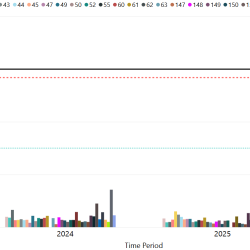
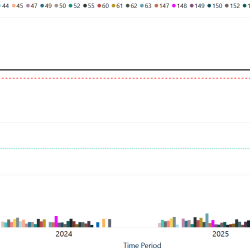
The results of the monitoring program for 2 of the higher risk SEGs from underground and surface operations are shown below. The graphs show the average exposure of the SEG to respirable dust over the previous quarters/years. Each vertical bar represents a different mine site.
The respirable dust graphs below show a line for the occupational exposure limit (OEL) at 1.5 mg/m3, as well as a common shift adjusted OEL of 1.4 mg/m3 for miners working more than 40 hours per week.
Note: Some datasets may contain less than the statistically significant 6 samples and are therefore provided as a guide only to ensure a full data set is represented.
Note: The mines represented in Blast crew similar exposure group, with average exposure above the regulatory limit, were working under a directive with interim dust controls in place to manage exposure.
Underground sites
Longwall production (QCU001) SEG
Enlarge image of Respirable dust levels in underground coal mines for the longwall workers SEG.
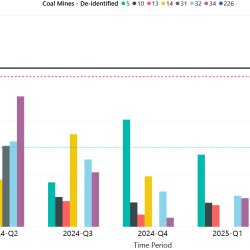
Respirable dust levels in underground coal mines for the longwall workers SEG
Development production (QCU002) SEG
Enlarge image of Respirable dust levels in underground coal mines for the development workers SEG.
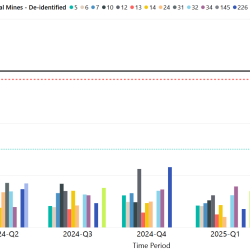
Surface sites
Blast crew (QCS007) SEG
Enlarge image of Respirable dust levels in surface coal mines for the blast crew workers SEG.
Blast hole drillers (QCS010) SEG
Enlarge image of Respirable dust levels in surface coal mines for the blast hole drillers workers SEG.
Total exceedances for respirable dust
The following graphs show the number of times that the OEL or the shift-adjusted OEL was exceeded across all sites (underground and surface operations) and the percentage of exceedances per mine.
Total number of exceedances
Total number of exceedances of respirable dust OELs in coal mines
Total percentage of exceedances
Percentage of exceedances of respirable dust OELs in coal mines
Respirable crystalline silica (quartz)
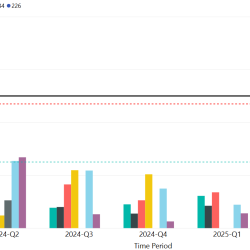
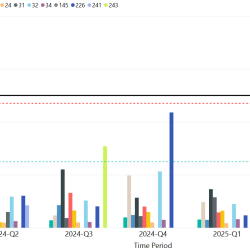
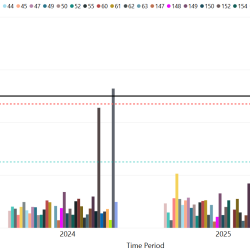
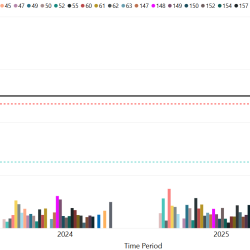
The results of the monitoring program for 2 of the higher risk SEGs from underground and surface operations are shown below. The graphs show the average exposure of the SEG to respirable crystalline silica (quartz) over the previous quarters/years. Each vertical bar represents a different mine site.
The RCS graphs below show the OEL at 0.05mg/m3, as well as a shift-adjusted OEL of 0.047mg/m3 for miners who work more than 40 hours per week on average.
Underground sites
Longwall production (QCU001) SEG
Enlarge image of Respirable crystalline silica levels in underground coal mines for the longwall workers SEG.
Development production (QCU002) SEG
Enlarge image of Respirable crystalline silica levels in underground coal mines for the development workers SEG.
Surface sites
Blast crew (QCS007) SEG
Enlarge image of Respirable crystalline silica levels in surface coal mines for the blast crew workers SEG.
Blast hole drillers (QCS010) SEG
Enlarge image of Respirable crystalline silica levels in surface coal mines for the blast hole drillers workers SEG.
Total exceedances for respirable crystalline silica (quartz)
The following graphs show the number of times that the OEL or the shift-adjusted OEL was exceeded across all sites (underground and surface operations) and the percentage of exceedances per mine.
Total number of exceedances
Total number of exceedances of OEL for respirable crystalline silica
Total percentage of exceedances
Percentage of exceedances of OEL for respirable crystalline silica
Dust monitoring data - mineral mines and quarries
All Queensland mine and quarry sites are required to report respirable dust and respirable crystalline silica sampling results to the Queensland Mines Inspectorate. The data are collated by Resources Safety & Health Queensland, and can be accessed below.
You can use this data to:
- review and update your safety and health management system (SHMS)
- assess and manage the risks of respirable dust and respirable crystalline silica
- target dust control strategies to high-risk areas and activities.
About the data
The data presented is for 'exceedances'. These are instances when the worker's personal dust sampling result exceed the occupational exposure limit (OEL) or the shift adjusted OEL.
The data is broken down by mine type, employee type, date and reporting classes. The reporting classes identify groups of workers who have the same general exposure to risk, for example because they perform similar tasks or use the same types of materials or processes.
Information that could identify individual mine sites has been omitted.
Viewing the data
Click on the link below to open the data dashboard. Toggle the double arrow at the bottom right to expand to the full screen view or to exit full screen view. You'll find instructions on using the dashboard in the top green panel.
Email QLDMinesInspectorate@rshq.qld.gov.au if you have any queries.
Analysis and trends
Analysis of the data for the 2018-19 financial year show, for each reporting class, the areas reporting the greatest number of exceedances. These areas are the priority focus for change and Queensland Mines Inspectorate activities.
- Support of mining processes: over 80% of reported exceedances relate to maintenance activities.
- Open cut/surface operations: 50% of reported exceedances related to blast and drill activities.
- Processing: 50% of reported exceedances relate to crushing activities.
- Underground operations: 38% of reported exceedances relate to installation of services underground.
The overall exceedance rate for mines and quarries has improved for both respirable crystalline silica and respirable dust.
- Respirable crystalline silica improved from 5.1% in 2017/18 to 4.3% in 2018/19.
- Respirable dust improved from 0.7% in 2017/18 to 0.5% in 2018/19.
Exposure to respirable dust is not a reliable predictor of exposure to respirable crystalline silica. For every respirable dust exceedance reported, the data showed about 8 more respirable crystalline silica exceedances are reported.
© The State of Queensland 1995–2026