Making the arts accessible for everyone
Footage from The Bogong's Song, Bangarra Dance Theatre. Copyright credit Cass Eipper.
Audio description: A wide shot of Tjilala Brown-Roberts, an actor from The Bogong’s Song, performing on stage. A title on-screen reads: The Bogong's Song: a call to Country, Bangarra Dance Theatre. There is a projection of a forest scape at the back of the stage, and haze floats over the stage floor. A child’s bunk bed and dollhouse sit either side of the stage. We cut to various other shots from The Bogong’s Song performance: Tjilala and her co-star dancing in front of projection of stars, and them playing with a moth shadow puppet. We cut to a shot of Bradley Chatfield in an interview-style set up. His title appears on screen and reads: “Bradley Chatfield, Head of First Nations Programming at Queensland Performing Arts Centre”.
Bradley Chatfield: My name is Bradley Chatfield, head of First Nations Programming here at QPAC. I’m a Gamilaraay man from Coonabaraban, north-west New South Wales. With the Audio Described show, I think it’s really important because it broadens our audiences.
Audio description: We cut to a sign promoting The Bogong’s Song. Text on sign reads: Bangarra Dance Theatre, The Bogong’s Song – A Call to Country. A montage of shots of a First Nations person performing an audio described show. A close up shot of an iPad with the script for the audio described show. Text on screen gives the person’s name and description: “Chenoa Deemal, Audio Description of The Bogong’s Song”.
Audio Describer: A vast dusting of tiny lights gently glowing against a night sky, a galaxy covers the stage…
Audio description: Bradley Chatfield in an interview-style set up.
Bradley Chatfield: To have that tactile experience for that sense of touch, I think it’s really, really important for those that are vision impaired to feel and have that sensory connection to the show.
Audio description: We cut to various shots of a tactile tour guide on stage holding different puppets, and allowing audience members to feel them. A close up shot of a fire pit prop being passed down through the audience. A close up shot of one of the hand puppets from the show, with the guide demonstrating the puppet’s different textures. Text on screen reads: Tactile Tour of The Bogong’s Song. We cut to a wide shots of the guide on stage, continuing with the tactile tour.
Tactile Tour Guide: You can pat down the back of his head and you’ll feel there’s two types of material. There’s a…
Audio description: We cut back to Bradley Chatfield in his interview set up.
Bradley Chatfield: With The Bogong’s Song, Auslan is embedded within the performance itself.
Audio description: We cut to a shot of Tjilala on stage with her co-star, both kneeling in front of the prop campfire, signing in Auslan. Tjilala on stage in an animal costume, holding a plush animal. Then we cut to Tjilala in an interview-style set up. Her title appears on screen and reads: Tjilala Brown-Roberts, Performer, Bangarra Dance Theatre.
Tjilala Brown-Roberts: My name is Tjilala Brown-Roberts. I play Myee in The Bogong’s Song and I am a proud Warlpiri woman, originally from Alice Springs, Northern Territory.
Audio description: There is a montage of shots of the performance as Tjilala speaks. Shots of Tjilala and her co-star performing and signing Auslan. We cut back to Tjilala in an interview-style set up.
Tjilala Brown-Roberts: We have an entire scene that’s presented in Auslan, between Beau and a Grass Spirit. It allows us to have that next level connection to Deaf people who come to our show. Dance is almost like a second language for me and then incorporating this new language that I had to learn, it was pretty amazing.
Audio description: We cut back to a montage of shots of Tjilala and her co-star performing various scenes. Both actors dancing on the bunk beds, then performing in front of a projected screen with moths. A close up of Tjilala’s co-star kneeling on the stage and performing a scene in Auslan. We cut to Bradley Chatfield in his interview set up.
Bradley Chatfield: Creating works for people with different accessibility needs when you see it being done you realise how essential this is for the broader community. The more we do it, the more it will become part of the norm.
Audio description: Cut to a mid-shot of the tactile tour guide holding a ball, another prop from the show. A close-up shot of the tour guide picking up gum leaves off the stage. Cut to Tjilala dancing in front of a projection of a river. Cut to the tactical tour guide holding a black hat. A close up of a child in the audience holding the moth puppet on a stick. A Queensland Government logo graphic appears. It reads: Delivering for Queensland.
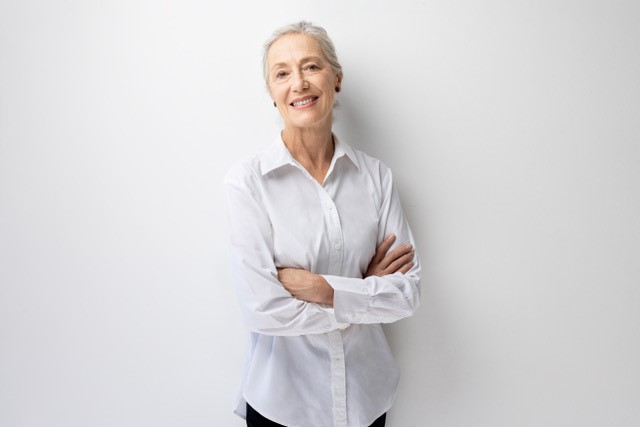
For Shane Carroll, a former professional dancer, and Education and Accessibility Consultant for Bangarra Dance Theatre, accessibility in the arts is more than a technical requirement—it’s a fundamental human right.
Ms Carroll creates audio descriptions for dance performances, ensuring people who are blind, have low vision or other sensory needs or considerations can experience the beauty, emotion and storytelling of dance. Her passion for accessible communication highlights the power of the arts to bring people together through equity, inclusion and community.
‘Dance is a universal language,’ Ms Carroll explains, ‘but for it to truly be universal, we need to ensure that everyone can access it in a meaningful way.’
Audio description, she says, is not just about narrating what happens on stage.
‘It’s about capturing the essence of the performance—the cultural, emotional and physical elements—and translating them into words.’
Ms Carroll’s process is layered and deeply respectful of both the cultural and artistic integrity of the work she is describing. She considers not just the visual aspects of a performance but also the emotional and sensory dimensions.
‘Sometimes I’ll get up and mimic the movement myself,’ Ms Carroll says.
‘What does it feel like? Is it something that cracks, or does it breathe? The words I choose need to embody the movement, not just describe it.’
This attention to detail has a profound impact on audiences.
Ms Carroll recalls a patron who attended a Bangarra performance with audio description for the first time,
‘The patron told us it was transformative and never thought she’d experience dance in such a visceral way.’
For many, these performances are more than just entertainment—they are a way to connect with culture, storytelling, and community.
Accessible performances also have the power to bring people together. Ms Carroll shares stories of blind patrons attending shows with sighted companions, only for the blind patrons to emerge with a deeper understanding of the performance.
‘Accessibility doesn’t just level the playing field—it can enrich everyone’s experience.’
‘At Bangarra, accessibility is not an afterthought—it’s built into every production. From tactile tours to pre-show notes available via QR codes, the company ensures that its powerful storytelling is truly inclusive.’
‘Bangarra’s work is deeply cultural and emotional,’ Ms Carroll says.
‘It’s about creating a shared experience that transcends barriers.’
Yet, challenges remain. Many theatres in Australia were built decades ago and are not designed with accessibility in mind. Ticketing systems often create additional barriers, requiring phone calls or complicated processes.
‘It’s the little things that make a big difference, and we can all do little things to make someone else’s experience better and make sure everyone feels welcome.’
For Ms Carroll, the journey towards equity in the arts and communities is ongoing.
‘We’ve come a long way, but there’s still so much to do,’ she says.
‘It’s not just about ramps or compliance. It’s about creating a world where everyone has the opportunity to experience the arts—and life—in the fullest way possible.’
Accessible communication, as Ms Carroll demonstrates, is not just about inclusion.
‘It’s about transformation. It’s about breaking down barriers, fostering understanding, and building communities where everyone belongs, and—in that—there is hope for a more equitable future for everyone.’