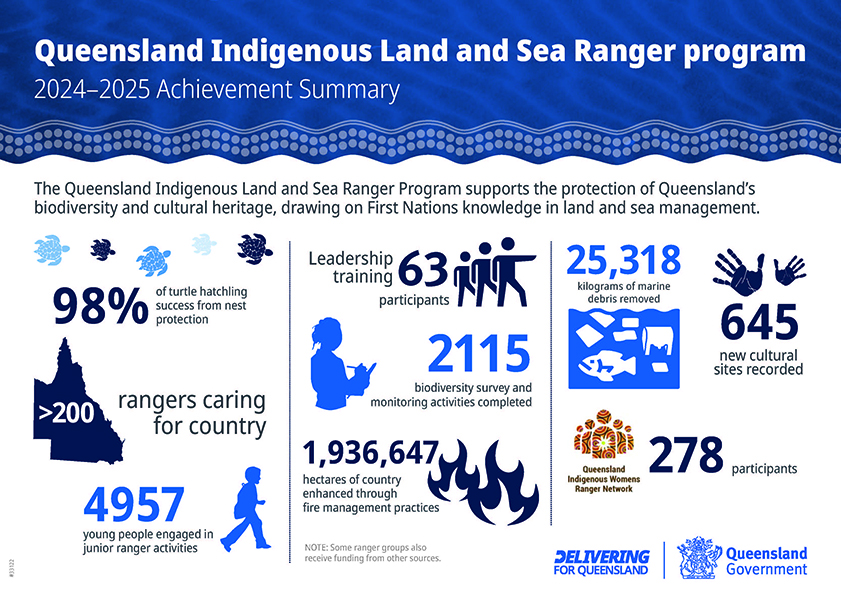
Indigenous Land and Sea Ranger program
The Queensland Indigenous Land and Sea Ranger Program exists due to the advocacy of First Nations communities over many decades. The Department of the Environment, Tourism, Science and Innovation remains committed to partnerships that honour their efforts.
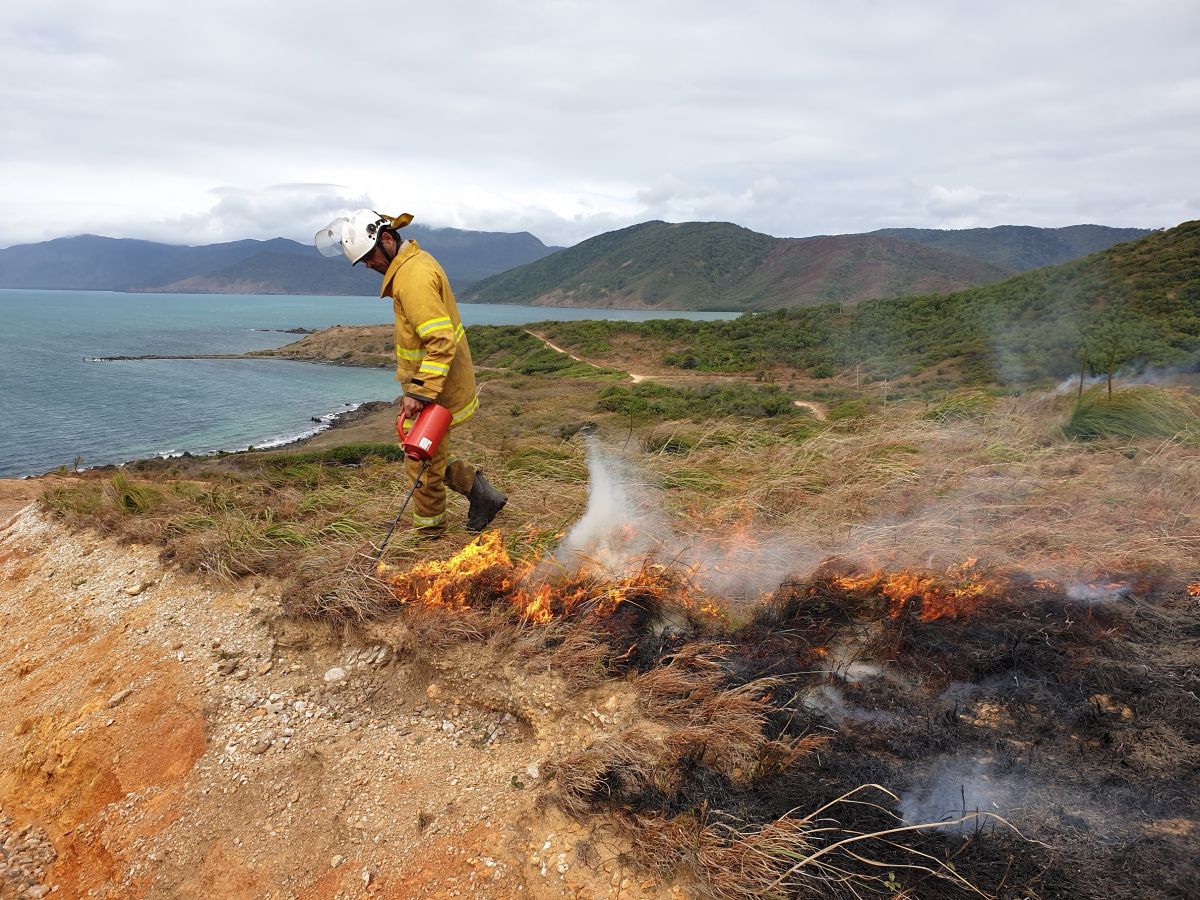
The Queensland Indigenous Land and Sea Ranger Program is a partnership between the Queensland Government and First Nations communities to care for land and sea country.
The program assists First Nations organisations to employ Land and Sea Rangers and offers grant funding, training, networking and partnership support.
In 2007, the program began with just 20 rangers and through a series of government commitments has now grown to more than 200 Indigenous Land and Sea rangers, working in 45 regional and remote locations across Queensland.
New ranger funding
The Queensland Indigenous Land and Sea Ranger Program additional funding round is now closed.
Applications are now being assessed by an independent panel and short-listed applications will be invited to submit a second, more detailed application. It is anticipated that successful applicants will be announced in early to mid-2026.
If you have questions about the funding process, please contact the grants officer on email landandsea@detsi.qld.gov.au or phone 0460 011 660.
For further details, you can also refer to the Program guidelines 512.5 KB) and the Frequently asked questions (FAQs) 210.8 KB) document.
Where do rangers work?
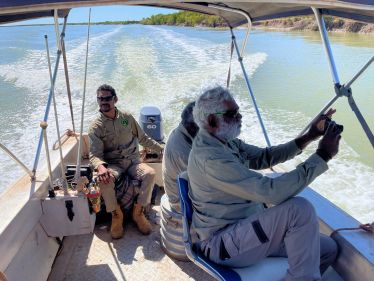
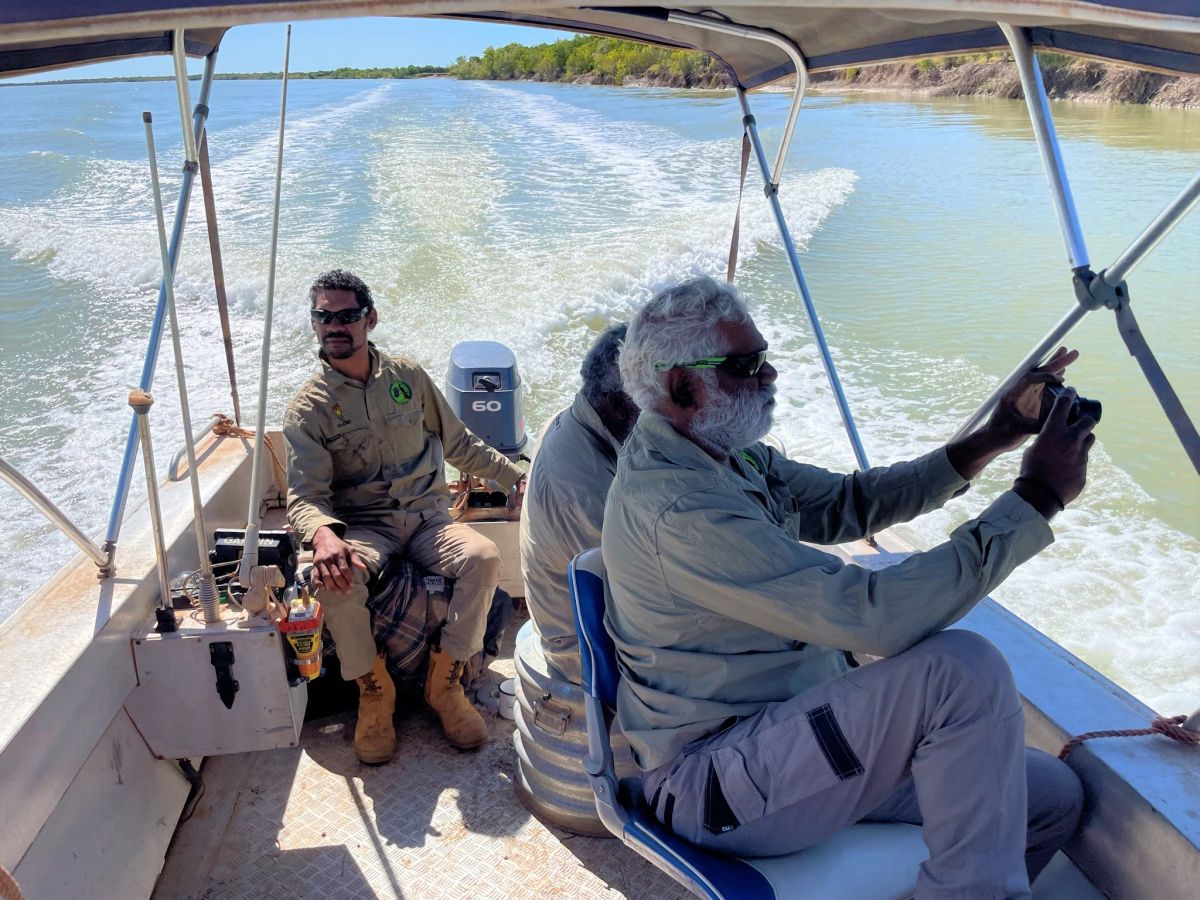
Indigenous Land and Sea Rangers work across the state, in diverse locations stretching from remote Cape York Peninsula to Lake Eyre Basin and the Gold Coast.
Land and Sea Rangers work on Country across tenure, including Native Title lands, protected areas, pastoral and mining leases, and private lands.
What do rangers do?
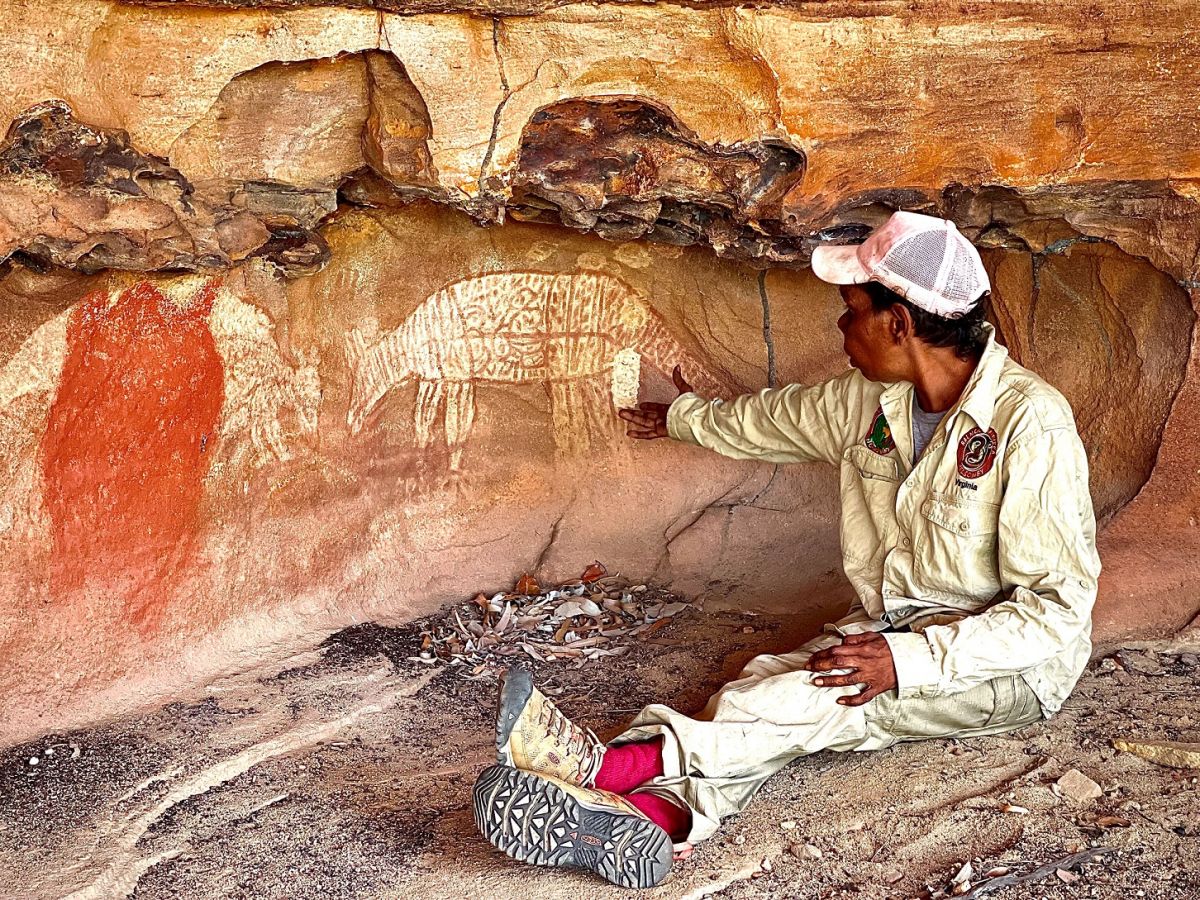
Indigenous Land and Sea Rangers care for Country, successfully combining traditional knowledge of Country with specialised training and experience in the practice and science of managing natural and cultural resources.
Ranger teams deliver negotiated work plans that reflect Traditional Owners’ priorities and aspirations.
Ranger work includes conservation services such as fire management, feral animal and pest plant control, native and threatened species monitoring, and cultural heritage site protection.
Rangers also play an important role in inter-generational knowledge sharing in their communities, with community and youth engagement programs.
What have rangers achieved?
Indigenous Land and Sea Rangers successfully deliver not only environmental outcomes but also a variety of social, cultural and economic benefits for First Nations communities. Their achievements have been well documented, and rangers continue to make a difference.
Indigenous Land and Sea Ranger programs are important to First Nations communities; and being a Land and Sea Ranger is a valued and rewarding role in many communities. Some ranger organisations offer unique tourism experiences, sharing their knowledge about Country with visitors.